
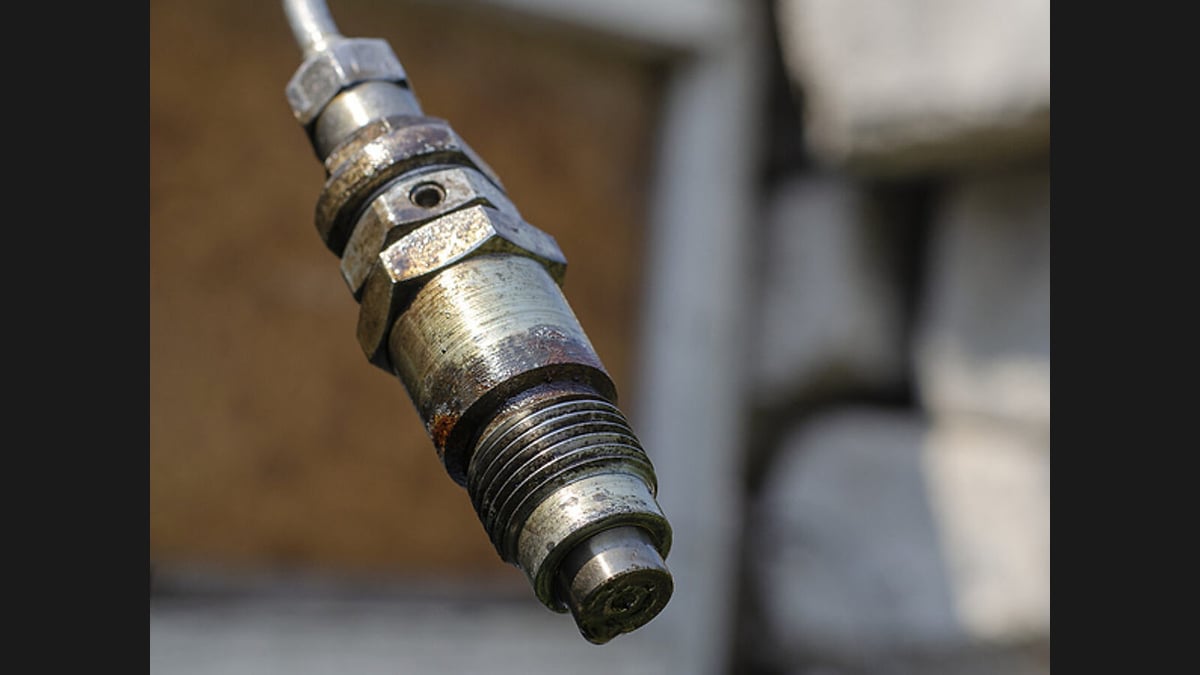
Common rail injectors operate at pressures above 2,000 bar and open and close thousands of times a minute. They're precision instruments working in brutal conditions — and in India, where fuel quality varies widely, they're one of the most frequently replaced diesel components.
The problem is that injector symptoms look like a dozen other faults. Here's how to narrow it down.
Symptoms of a failing common rail injector
Hard starting, especially when cold. A leaking injector bleeds rail pressure, so the engine cranks longer before it fires.
Rough idle or shaking. One cylinder receiving the wrong fuel quantity throws the whole engine out of balance. You feel it most clearly at idle.
Diesel knock or a metallic rattle. An injector delivering fuel at the wrong moment causes sharp, uneven combustion that sounds like knocking.
White smoke at startup. Unburnt diesel leaving the exhaust — a strong indicator of poor atomisation from a worn nozzle.
Black smoke under load. Over-fuelling from an injector that fails to close properly.
Rising fuel consumption. Leaking injectors return excess fuel to the tank. Your mileage drops with no obvious cause.
Loss of power and misfires. A cylinder not contributing properly means measurable power loss.
Fuel in the engine oil. Serious. A badly leaking injector can wash fuel past the rings and dilute your oil, which then destroys bearings. If your oil level is rising and the oil smells of diesel, stop the engine.
What actually causes injector failure
Contaminated fuel. Water and dirt are the leading cause in Indian conditions. Water corrodes internal surfaces; abrasive particles erode the nozzle and valve seat. The clearances inside an injector are measured in microns — particles far too small to see cause the damage.
Neglected fuel filters. The filter is the only thing protecting those micron clearances. Extending filter intervals to save money is how most injector sets get destroyed.
Carbon build-up. Deposits form on the nozzle tip over time, disrupting the spray pattern.
Running the tank very low. Sediment settles at the bottom of the tank, and so does water. Habitually running near empty feeds that straight into your fuel system.
Age and cycle count. Even with perfect maintenance, nozzles and solenoids wear out.
Why bench testing matters
You cannot judge an injector properly while it's fitted to the engine. Proper diagnosis requires a common rail test bench, which measures delivery quantity at several pressure points, return or back-leak volume, response time, and spray pattern quality.
This matters commercially. Many injectors that get condemned are serviceable — often needing only a nozzle or seal kit. And many that look fine turn out to be well outside tolerance. Testing tells you which, before you spend on a full set.
Turbo Tech Engineers supplies common rail test benches and coding equipment alongside parts, including the CRS CodeMaster and CRI-1/P test bench, supporting Bosch, Denso, Delphi, Continental, VDO, Zexel, CAT and Siemens systems.
Important: always replace in sets where specified
On many engines, fitting one new injector alongside three worn ones creates imbalance. Check the manufacturer's guidance. Also remember that most modern injectors require coding to the ECU after fitting — skipping this step causes the exact symptoms you were trying to fix.
Get the right injector
We stock fuel injectors and nozzles for Bosch, Delphi, Denso, Caterpillar and Cummins systems, covering trucks, buses, tractors, excavators and industrial engines. Supplying diesel fuel injection parts since 1996, from New Delhi and Amritsar.
Send your injector part number or a photo on WhatsApp for availability and pricing.
Call or WhatsApp: +91 96465 22590
Email: turbotechdelhi@gmail.com