Common rail diesel injectors are one of the most important components in a modern diesel fuel injection system. They control the amount and timing of fuel delivered into each engine cylinder, helping the engine achieve efficient combustion, reliable power delivery and controlled emissions.
Modern common rail systems separate fuel-pressure generation from fuel injection. A high-pressure pump supplies fuel to the common rail, which acts as a high-pressure accumulator. The rail then supplies pressurized fuel to individual injectors, while the engine control unit determines the appropriate injection timing and fuel quantity for each cylinder.
WHAT IS A COMMON RAIL DIESEL INJECTOR?
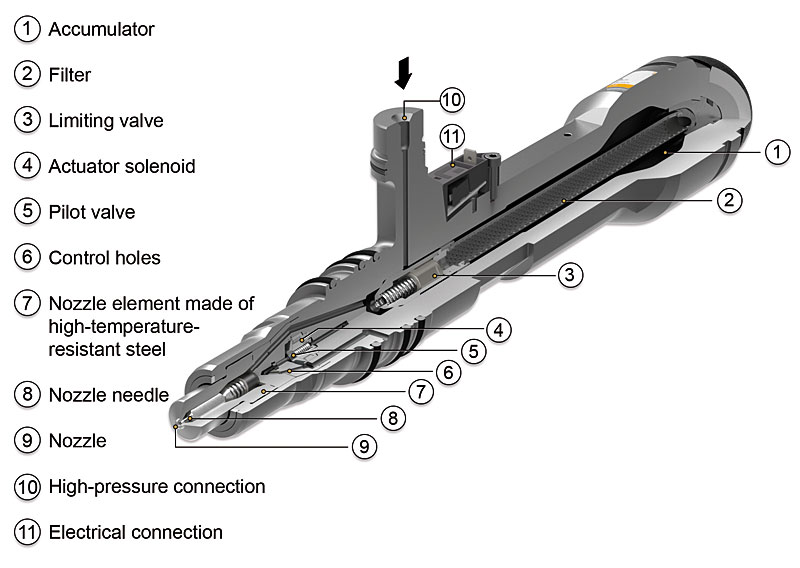
A common rail diesel injector is a precision fuel-injection component installed for each cylinder of a diesel engine. Its primary function is to deliver a precisely controlled quantity of pressurized diesel fuel into the combustion chamber.
The injector receives high-pressure fuel from the common rail and uses an electronically controlled mechanism to initiate and control injection. Depending on the injector design, this can involve solenoid or piezo technology.
Because injection timing and quantity can be controlled very precisely, common rail systems can use multiple injection events during a single combustion cycle. Bosch common rail systems, for example, can use multiple injections to influence combustion noise, fuel consumption and emissions.
HOW DOES A COMMON RAIL INJECTOR WORK?
The common rail fuel injection process involves several interconnected components.
First, fuel is supplied from the vehicle's fuel system to the high-pressure pump. The pump raises the fuel pressure and sends it to the common rail.
The common rail stores the pressurized fuel and distributes it to the individual injectors. A rail pressure sensor and pressure-control components help monitor and manage the system pressure.
When injection is required, the engine control unit sends an electrical command to the injector. The injector's control mechanism responds and allows the required quantity of fuel to pass through the nozzle into the combustion chamber.
The nozzle atomizes the fuel into a fine spray, allowing it to mix with the compressed air inside the cylinder. Accurate fuel quantity, injection timing and spray characteristics are important for proper diesel combustion.
WHY ARE COMMON RAIL INJECTORS IMPORTANT?
The injector directly affects how fuel enters the combustion chamber. A correctly operating injector helps maintain accurate fuel delivery and consistent combustion.
Modern common rail technology provides greater flexibility in controlling injection pressure, timing and quantity compared with older mechanical injection systems. This allows manufacturers to optimize engine performance across different operating conditions.
A properly functioning injector can contribute to:
Accurate fuel delivery
Efficient combustion
Smooth engine operation
Consistent power delivery
Controlled fuel consumption
Reduced combustion noise
Support for modern emissions requirements
COMMON RAIL DIESEL INJECTOR PROBLEMS
Common rail injectors operate under demanding conditions involving high fuel pressures, rapid electrical actuation and very precise mechanical tolerances. Contamination, wear and fuel-system problems can affect injector performance.
Some common injector-related problems include:
Injector nozzle wear or contamination
Incorrect fuel delivery
Excessive injector return flow
Electrical or solenoid-related faults
Poor spray pattern
Internal leakage
Injector control-valve problems
Fuel contamination
Wear caused by prolonged operation
A faulty injector does not always mean that the injector itself is the original cause of the problem. Fuel contamination, filtration problems, high-pressure pump issues and other fuel-system faults can also contribute to injector failure. Proper diagnosis is therefore important before replacing components.
SYMPTOMS OF A FAULTY DIESEL INJECTOR
A failing common rail injector can produce several noticeable symptoms. The exact symptoms depend on the type and severity of the fault.
ROUGH OR UNSTABLE IDLING
Uneven fuel delivery between cylinders can cause the engine to idle roughly or become unstable. A faulty injector can disturb the intended fuel delivery and combustion process. Delphi identifies rough idle as one of the common symptoms associated with faulty common rail injectors.
DIFFICULT ENGINE STARTING
An injector problem can contribute to difficult starting when the required fuel delivery is not achieved. However, hard starting can also result from battery, glow-plug, fuel-pressure or other fuel-system problems, so injector replacement should not be assumed without diagnosis.
LOSS OF ENGINE POWER
Incorrect fuel delivery can affect combustion and reduce engine performance. A vehicle may feel slower under acceleration or struggle more than usual under load.
INCREASED FUEL CONSUMPTION
A malfunctioning injector may deliver fuel incorrectly, potentially affecting combustion efficiency and fuel consumption. The injector should be tested before concluding that it is the cause of increased fuel usage.
ENGINE SURGING
An injector that delivers an inconsistent or excessive quantity of fuel can contribute to engine speed fluctuations or surging. Delphi lists engine surge among possible symptoms of a faulty common rail injector.
ENGINE KNOCK OR UNUSUAL COMBUSTION NOISE
Incorrect injection can affect the combustion process and may contribute to unusual engine noise. Injector-related symptoms should be confirmed through proper testing because similar symptoms can originate elsewhere in the engine or fuel system.
CHECK ENGINE LIGHT
Modern diesel engines can detect certain injector and fuel-system faults through electronic monitoring. A diagnostic scan may identify fault codes associated with injector operation, although a fault code alone does not always prove that the injector itself is defective.
EXCESSIVE SMOKE
Incorrect fuel delivery can affect combustion and may contribute to abnormal exhaust smoke. However, smoke can also be caused by turbocharger, air-intake, EGR, compression or other engine problems.
WHAT CAUSES COMMON RAIL INJECTOR FAILURE?
Several factors can contribute to premature injector problems.
Poor-quality or contaminated diesel fuel can damage precision fuel-system components. Water and particulate contamination are particularly important concerns for high-pressure diesel fuel systems.
A clogged or poorly maintained fuel filter can also allow contaminants to reach sensitive components or restrict the fuel supply.
Normal wear is another factor. Common rail injectors operate repeatedly at high pressure and require extremely precise control, so wear can eventually affect their performance.
Incorrect installation, improper servicing or failure to address an underlying fuel-system problem can also lead to repeat injector failures.
HOW ARE COMMON RAIL INJECTORS DIAGNOSED?
Injector diagnosis should be based on testing rather than symptoms alone.
A professional diesel technician may use diagnostic equipment to check stored fault codes and engine parameters. Additional testing can include injector return-flow or leak-off testing, electrical checks and injector bench testing, depending on the injector and application.
The injector's part number should also be verified before ordering a replacement. Common rail injectors are application-specific, and visually similar injectors may have different specifications.
WHEN SHOULD A DIESEL INJECTOR BE REPLACED?
An injector should generally be replaced when testing confirms that it is outside the manufacturer's specified operating parameters or when the component is damaged beyond economical repair.
In some cases, individual injector components such as nozzles, control valves or other internal parts may be serviced by a qualified diesel injection specialist. Whether repair or replacement is appropriate depends on the injector design, condition, available components and required calibration.
Always compare the replacement injector's part number and specifications with the original component before installation.
HOW TO CHOOSE THE CORRECT COMMON RAIL INJECTOR
Choosing the correct diesel injector is more than simply matching the vehicle model.
Before purchasing, verify:
Injector part number
Engine model and specification
Vehicle or equipment application
Fuel injection system
Injector type
Original equipment references where applicable
Connector and physical configuration
Required calibration or coding information
For example, Bosch and Delphi produce common rail injectors across a wide range of passenger vehicles, commercial vehicles and off-highway applications. The correct injector must match the specific fuel-injection system and engine application.
WHY INJECTOR PART NUMBERS MATTER
The part number is one of the most reliable ways to identify a replacement injector.
Two injectors may look similar externally but have different flow characteristics, electrical specifications, nozzle configurations or calibration requirements.
When ordering a replacement common rail injector, provide the complete part number whenever possible. This helps reduce the risk of purchasing an incompatible component.
COMMON RAIL INJECTOR MAINTENANCE TIPS
Use good-quality diesel fuel from reliable sources.
Replace the fuel filter according to the manufacturer's recommended service interval.
Prevent dirt and moisture from entering the fuel system during servicing.
Do not ignore injector-related warning signs.
Investigate the cause of repeated injector failures instead of repeatedly replacing injectors.
Use the correct injector part number for the specific engine and fuel system.
Have injectors tested by a qualified diesel fuel-injection specialist when performance problems occur.
FINAL THOUGHTS
Common rail diesel injectors play a critical role in modern diesel engines. They must deliver the correct quantity of fuel at the correct time and with the required spray characteristics for efficient combustion.
Symptoms such as rough idling, difficult starting, loss of power, increased fuel consumption, engine surging, unusual combustion noise or warning lights can indicate an injector or fuel-system problem. However, these symptoms can have multiple causes, so accurate diagnosis should come before replacement.
For replacement applications, always verify the injector part number, engine application and fuel-system specification before ordering.
TurboTech Engineers supplies diesel fuel-injection components including common rail injectors and related diesel fuel-system parts for a wide range of applications. Browse the available fuel injector products to find components matching your required part number and application.